5.8 Hybrid systems with solar thermal and boilers
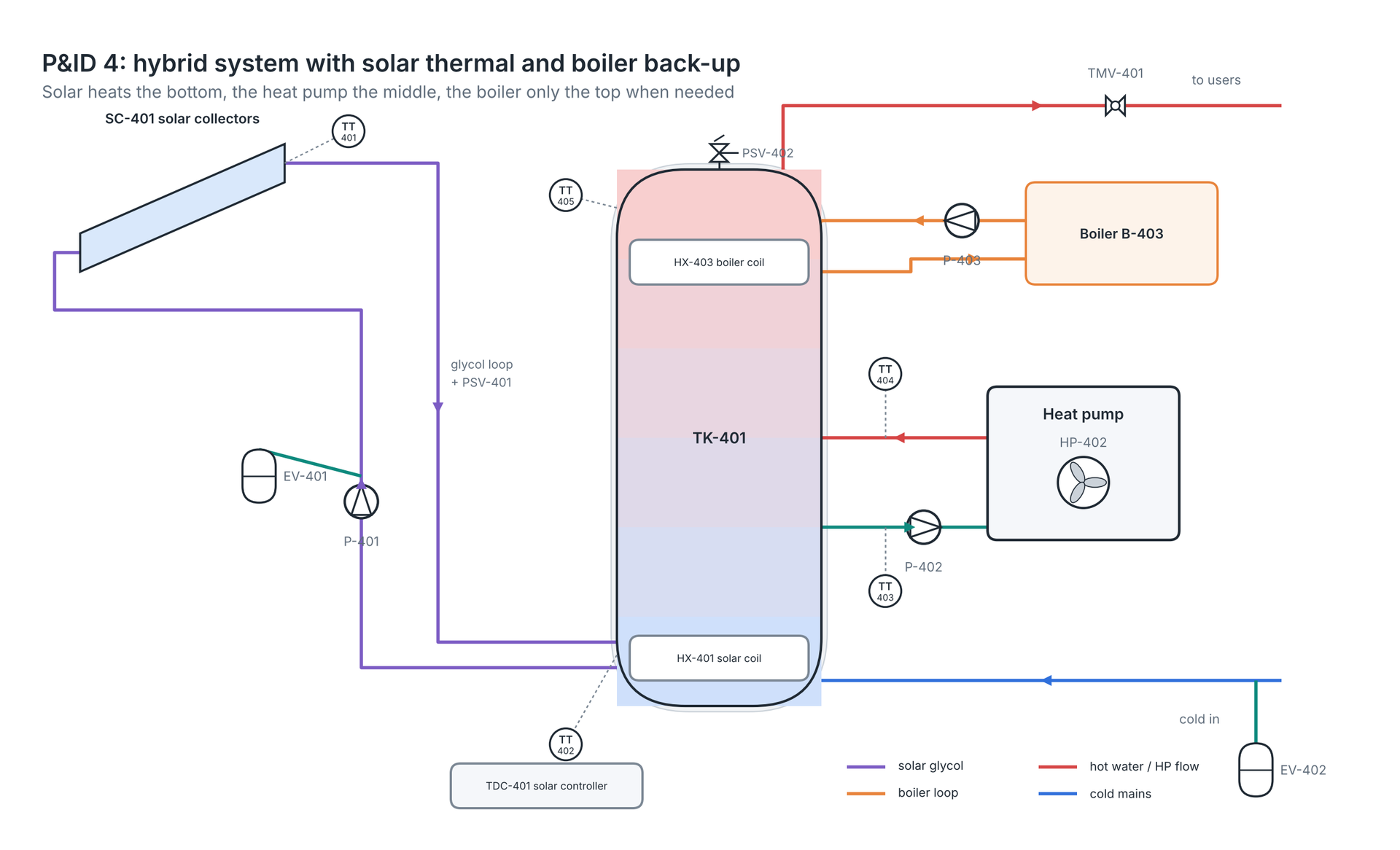
Solar thermal collectors (flat plate or evacuated tube) give free heat on sunny days. A heat pump gives heat at low running cost any time. A boiler (LPG, PNG or diesel) gives high temperature quickly and acts as backup.
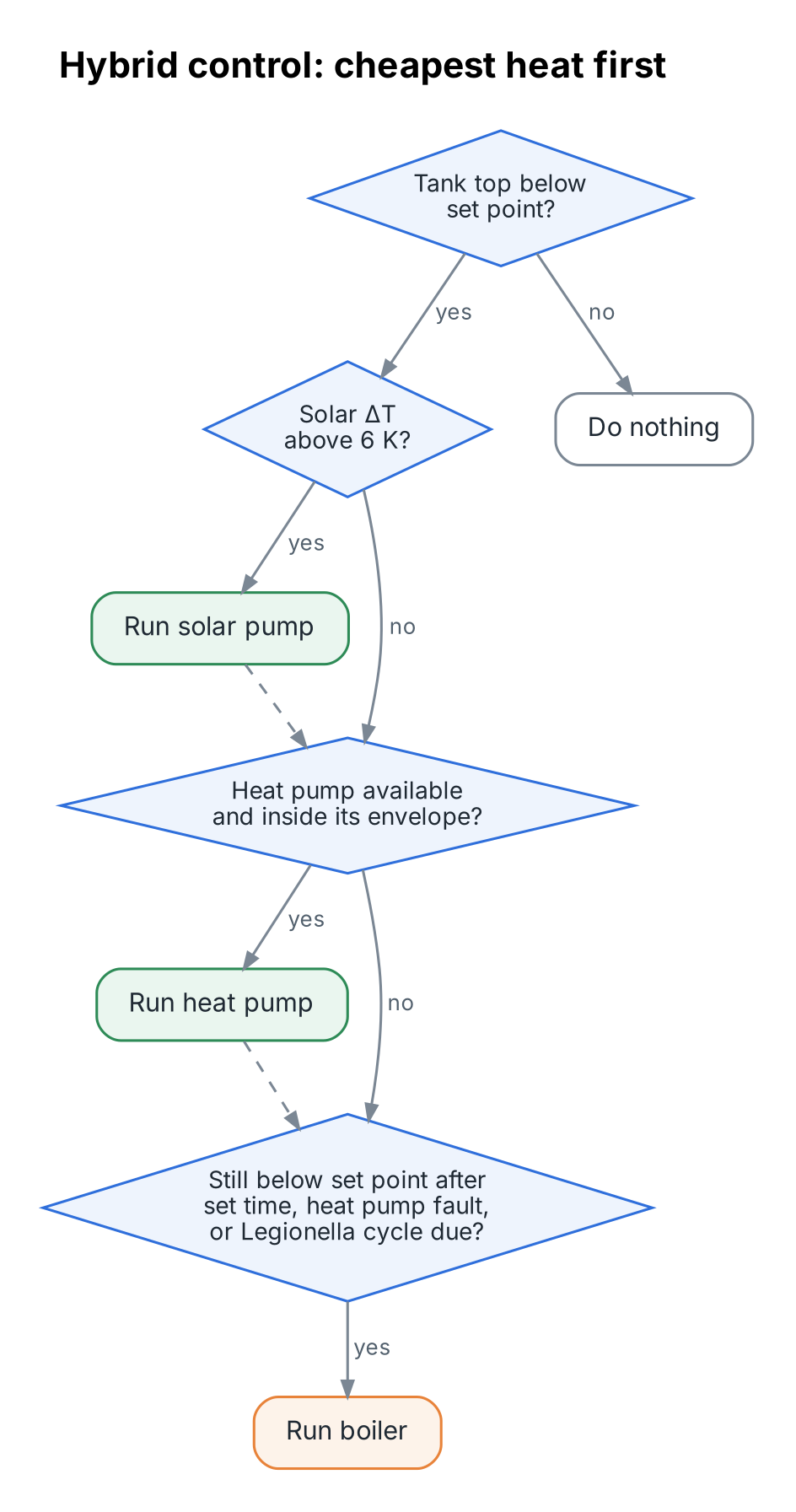
The usual order: solar preheats the bottom of the tank, the heat pump lifts water to 50–55 °C, and the boiler or electric heater tops up only for peaks, pasteurisation, or a heat pump failure.
Running cost per kWh of heat delivered (example rates):
| Source | Example price | Efficiency | Cost per kWh heat |
|---|---|---|---|
| Solar thermal | free | — | ≈ ₹0 (plus pump power) |
| Heat pump COP 3.5 | ₹9/kWh | 350 % | ₹2.6 |
| PNG boiler | ₹75/scm, ~10.5 kWh/scm (typical) | 88 % | ₹8.1 |
| LPG boiler | ₹100/kg, ~12.8 kWh/kg (typical) | 88 % | ₹8.9 |
| Diesel boiler | ₹100/L, ~10 kWh/L (typical) | 85 % | ₹11.8 |
| Electric heater | ₹9/kWh | ~100 % | ₹9.0 |
Worked example — annual saving of adding a heat pump to an LPG boiler (Bengaluru hostel)
Load 150 kWh/day heat, 365 days = 54,750 kWh/year. Solar covers 40 % (typical in Bengaluru with good array) = 21,900 kWh. Remaining 32,850 kWh. LPG only: 32,850 × ₹8.9 = ₹2.92 lakh/year. HP covers 90 % of remainder, LPG 10 %: HP 29,565 × ₹2.6 = ₹76,900; LPG 3,285 × ₹8.9 = ₹29,200. Total ₹1.06 lakh. Saving ≈ ₹1.86 lakh/year (example rates).
Remember
- Solar first, heat pump second, boiler last.
- Keep each source in its own tank zone to protect stratification.
- Solar heats the bottom, which lowers HP COP — size HP return accordingly.
- Use a TMV on outlet when sources can overheat the tank.
In a hybrid system, the cheapest heat source runs first and the heat pump or boiler tops up.
There are no comments for now.
to be the first to leave a comment.