5.2 Capacity vs ambient: derating
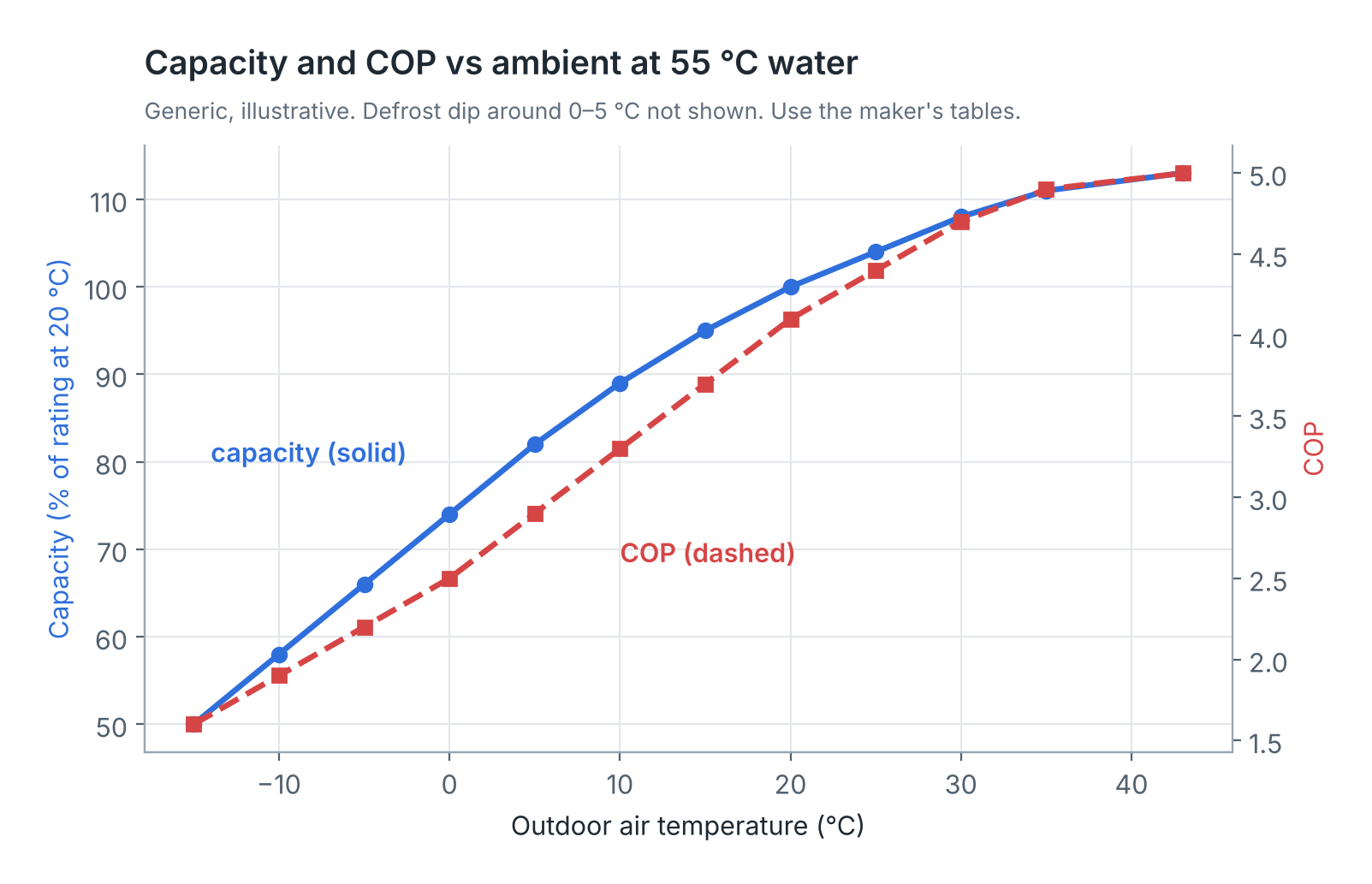
An air-source heat pump picks up heat from the air. Colder air holds less heat for the evaporator to collect, and the compressor pumps less refrigerant mass because suction gas is less dense. Cold air simply has less heat to give, so the machine picks up less.
Derating means reducing the rated capacity to the real capacity at your design ambient. The design ambient is the low outdoor temperature you design for, for example the typical winter morning low at your site.
Typical Indian design ambients (illustrative, check local climate data):
| City | Typical winter design ambient | Note |
|---|---|---|
| Chennai | 18–20 °C | Little derating |
| Mumbai | 15–17 °C | Little derating |
| Bengaluru | 12–14 °C | Mild |
| Delhi | 4–6 °C | Moderate, fog/frost mornings |
| Shimla | −2 to 2 °C | Strong derating, defrost |
| Leh | −20 to −15 °C | Needs cold-climate (EVI) unit |
Worked example — derating for Delhi winter
A unit is rated 20 kW at 20 °C. Its table shows 82 % capacity at 5 °C with 55 °C water. Defrost loss is taken as 8 % (typical).

Qsite = 20 × 0.82 × (1 − 0.08) = 20 × 0.82 × 0.92 = 15.1 kW. The "20 kW" machine is a 15 kW machine on a Delhi January morning.
Remember
- Size at design ambient, not at rating ambient.
- Capacity and COP both fall with ambient.
- Add defrost loss below about 7 °C in humid air.
- In hot climates the unit has spare capacity in summer.
As outdoor air gets colder, an air-source heat pump delivers less heat, so you size at the coldest design ambient.
There are no comments for now.
to be the first to leave a comment.