4.1 Where heat pumps fit: domestic, commercial, industrial
A heat pump moves heat from a low-temperature source (air, water or ground) to a higher-temperature sink (hot water or air). It does not burn fuel. It uses electricity to drive a compressor, like a fridge, but using the heat it rejects instead of the cold it makes.
The key number is the temperature lift. Lift is the difference between the source temperature and the delivery temperature. A small lift means a high COP. COP (coefficient of performance) is heat delivered divided by electricity used.
Think of a pressure cooker. Raising water from 25 °C to 45 °C is easy. Pushing it to 95 °C takes far more effort. Heat pumps behave the same way.
| Segment | Typical uses | Typical delivery temperature | Fit |
|---|---|---|---|
| Domestic | Bathing, kitchen, underfloor heating | 45–60 °C | Very good |
| Commercial | Hotels, hostels, hospitals, gyms, laundries, pools | 28–65 °C | Very good |
| Industrial (low temp) | Washing, CIP, boiler feed preheat, dyeing | 50–80 °C | Good with high-temperature units |
| Industrial (high temp) | Steam, frying, sterilising | Above 100 °C | Preheat only, or specialist systems |
Remember
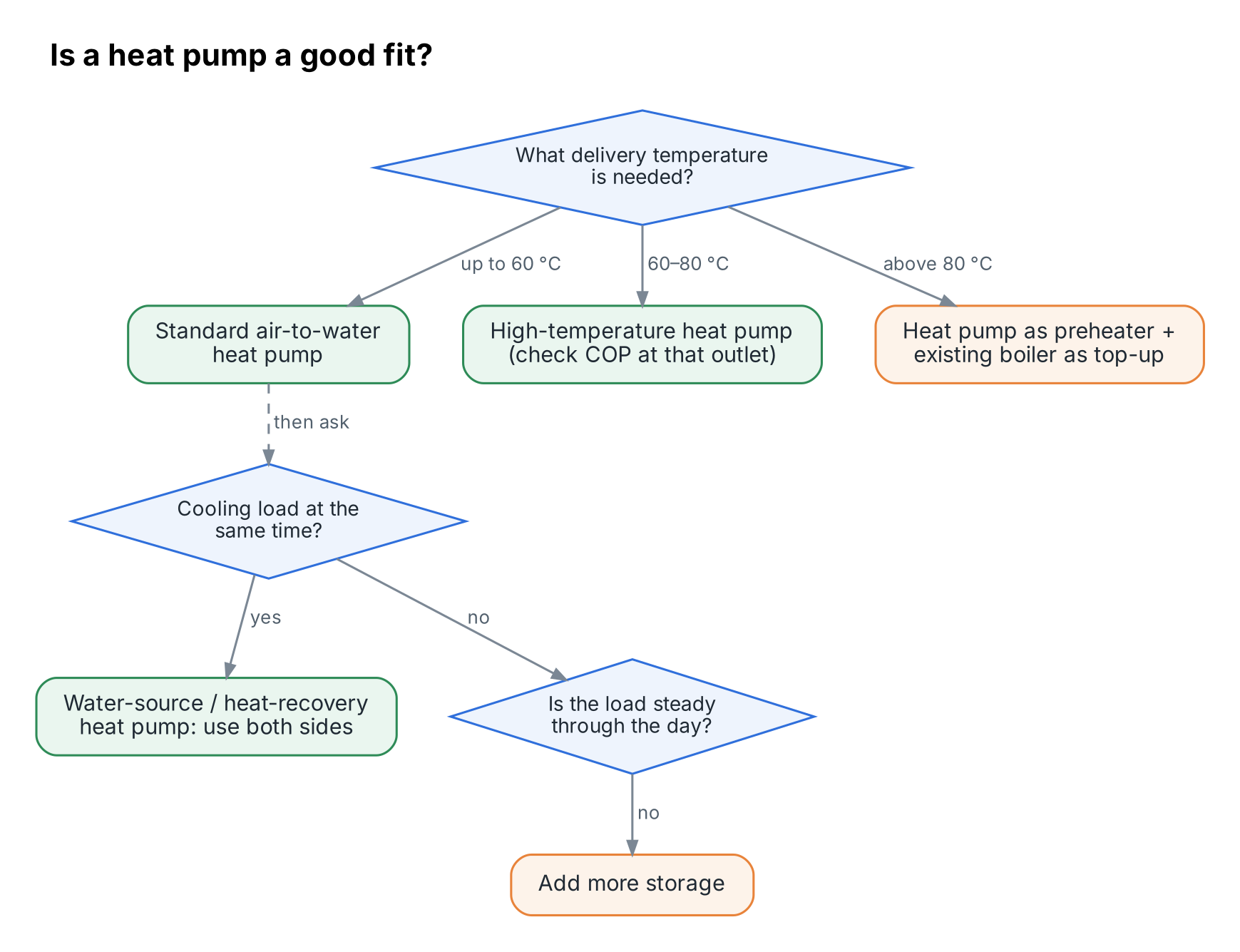
- Lift drives COP: keep delivery temperature as low as the process allows.
- Domestic and commercial hot water up to 60 °C is the natural home of heat pumps.
- Above about 80 °C, use the heat pump as a preheater.
- A site that needs heating and cooling together is the best case of all.
A heat pump fits any job that needs a steady supply of heat below about 80 °C, and it fits best when the temperature lift is small.
There are no comments for now.
to be the first to leave a comment.