3.9 Heat pumps vs solar water heaters, boilers and geysers: where each fits
An electric geyser turns 1 kWh of electricity into about 1 kWh of heat. It is cheap to buy and suits small, occasional use. Running cost is high for large volumes.
A solar water heater uses sunlight on flat-plate or evacuated-tube collectors. Fuel is free, but output depends on sunshine. It needs roof space and a backup for cloudy days and monsoon.
A boiler burns LPG, PNG, diesel or biomass. It can reach high temperatures and steam quickly. Fuel cost, emissions, safety and fuel handling are the drawbacks.
A heat pump gives 3–4 kWh of heat per kWh of power, typically. It works day and night, in any weather. First cost is higher than a geyser, but running cost is the lowest of the electric options.
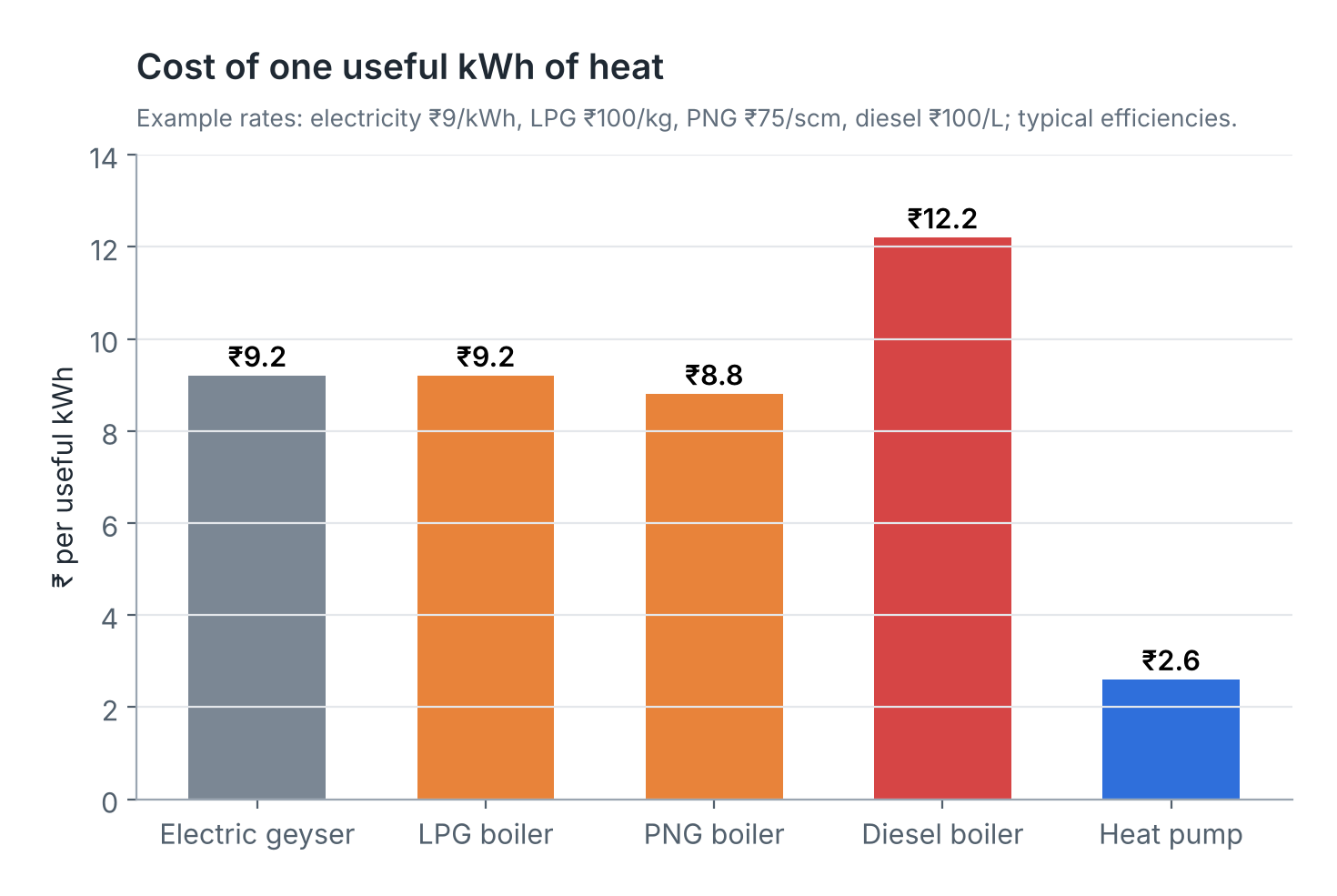
Worked example — Cost of 1 kWh of useful heat (example fuel rates)
Example rates: electricity ₹9/kWh, LPG ₹100/kg, PNG ₹75/scm, diesel ₹100/L. Typical heating values: LPG ≈ 12.8 kWh/kg, PNG ≈ 10 kWh/scm, diesel ≈ 10 kWh/L.

- Electric geyser: ₹9 ÷ (1 × 0.98) = ₹9.2
- LPG boiler: ₹100 ÷ (12.8 × 0.85) = ₹9.2
- PNG boiler: ₹75 ÷ (10 × 0.85) = ₹8.8
- Diesel boiler: ₹100 ÷ (10 × 0.82) = ₹12.2
- Heat pump (COP 3.5): ₹9 ÷ 3.5 = ₹2.6
| Technology | Typical efficiency / COP | Max. temp. (typical) | Works at night / monsoon | Best fit |
|---|---|---|---|---|
| Electric geyser | 0.95–0.99 | 60–75 °C | Yes | Homes, small daily use |
| Solar water heater | Depends on sun | 50–70 °C | No, needs backup | Sunny sites with roof space, morning use |
| LPG / PNG / diesel boiler | 0.80–0.90 | Steam / >100 °C | Yes | Steam, very high temperature |
| Heat pump | COP 3–4.5 | 55–65 °C standard; 80–120 °C high-temp | Yes | Large daily hot water, process heat to 90 °C |
| Solar + heat pump | Combined | 55–65 °C | Yes | Lowest running cost, good space |
Remember
- Geyser: cheap to buy, costly to run.
- Solar: free fuel, but weather-dependent; always needs backup.
- Boiler: for steam and very high temperatures.
- Heat pump: lowest running cost for most hot-water jobs up to 90 °C.
- Solar plus heat pump is a strong combination.
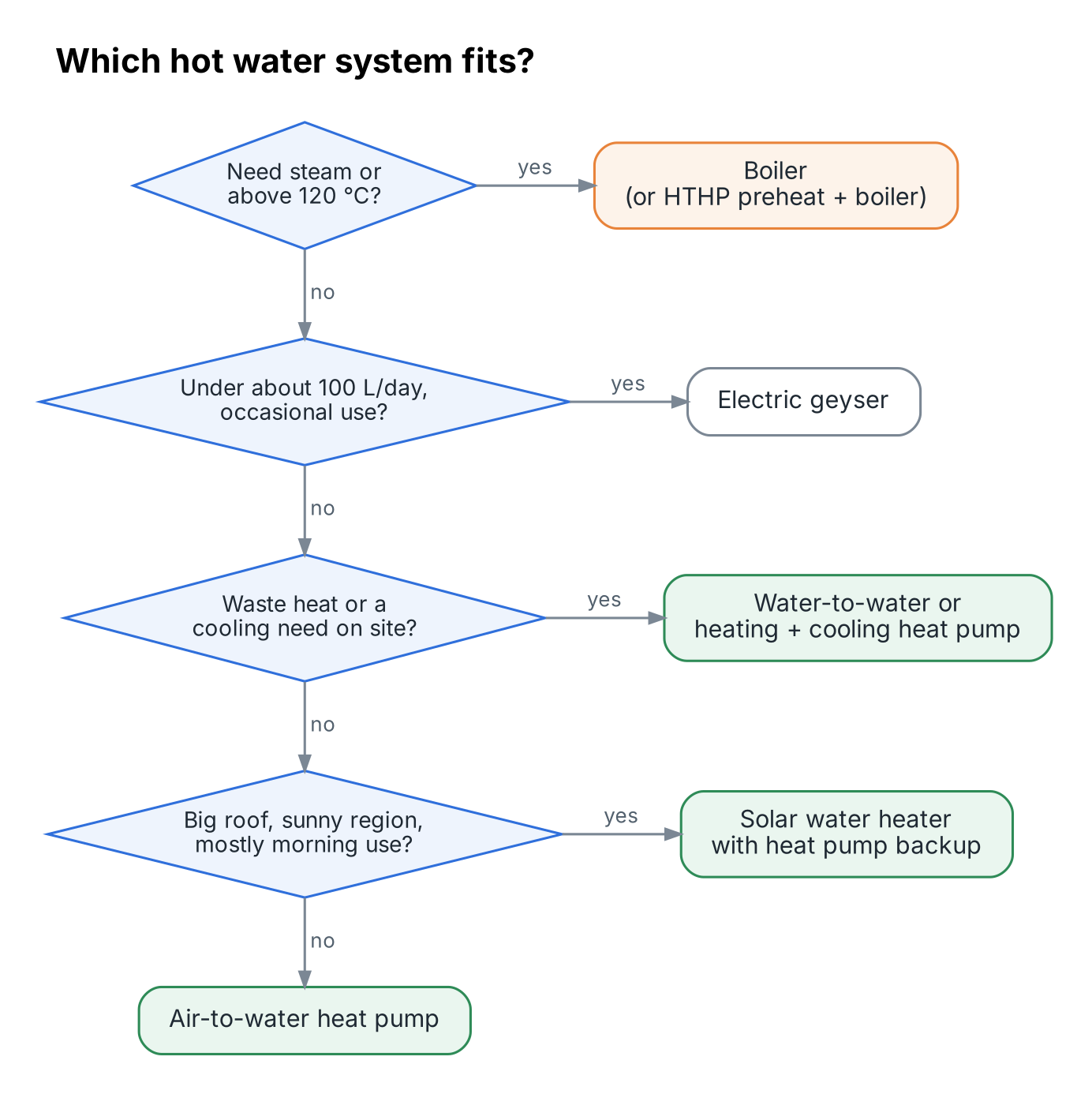
Each hot-water technology has a place; choose by running cost, reliability of supply, space and temperature needed.
There are no comments for now.
to be the first to leave a comment.