1.9 Energy, power and efficiency: why COP can exceed 100%
Efficiency is useful output divided by input. An electric geyser element turns almost all electricity into heat, so it is close to 100% efficient. A gas burner loses some heat up the flue, so it is typically 80–90%.
A heat pump is different. It does not turn electricity into heat. It uses electricity to move heat from the air into water. So the heat delivered is larger than the electricity used.
COP (coefficient of performance) is heat delivered ÷ electrical input, both in kW. COP 4 means 4 kW of heat for 1 kW of electricity. Expressed as a percentage, that is 400%.
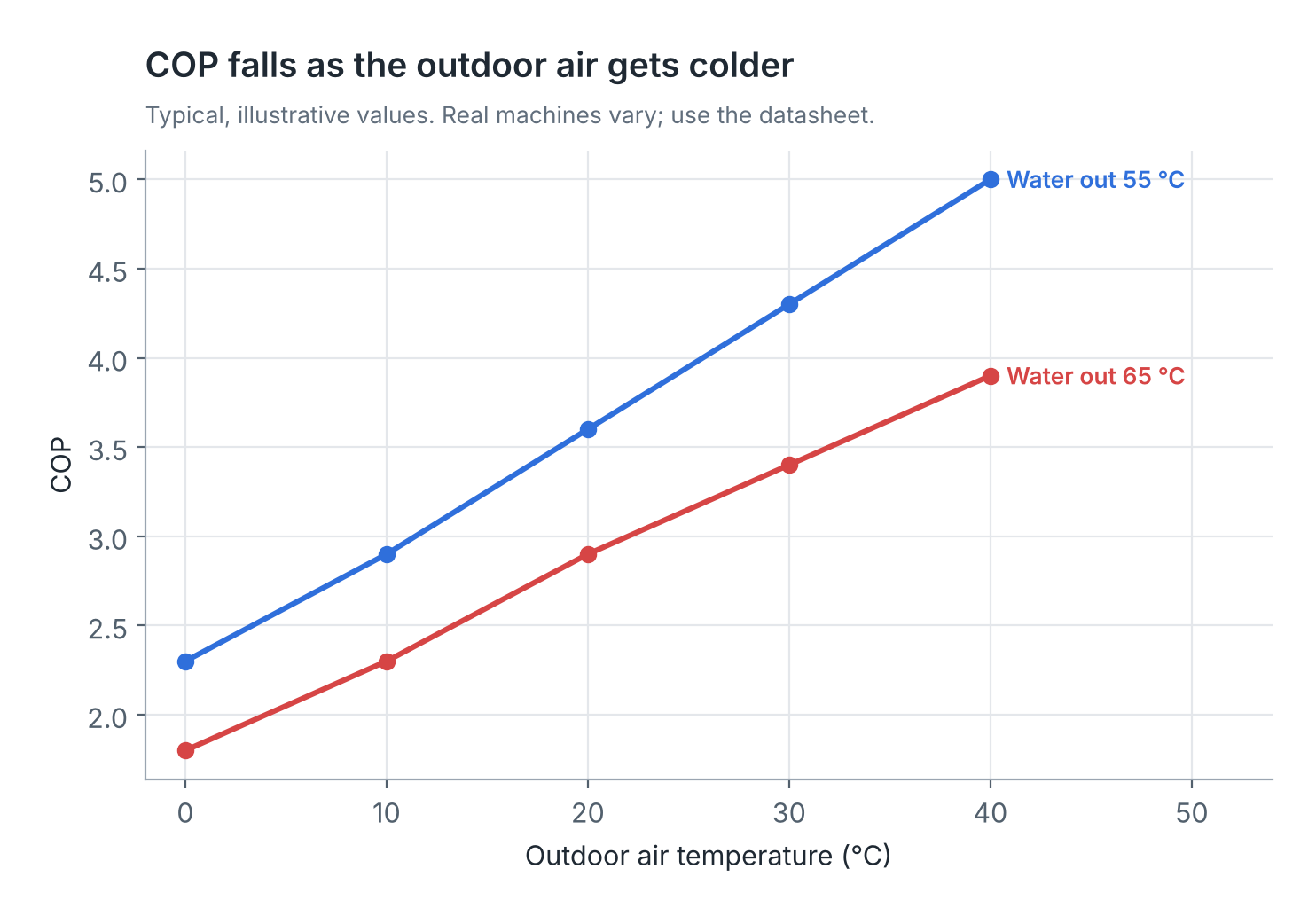
COP is not fixed. It falls when the source is colder or the water is hotter, because the "lift" is bigger. A heat pump making 55 °C water from 35 °C air in Nagpur will show a higher COP than one making 65 °C water from 10 °C air in Shimla.
No law is broken. By the first law, heat delivered = heat from air + electricity. The extra comes from the environment, which is warmed by the sun.
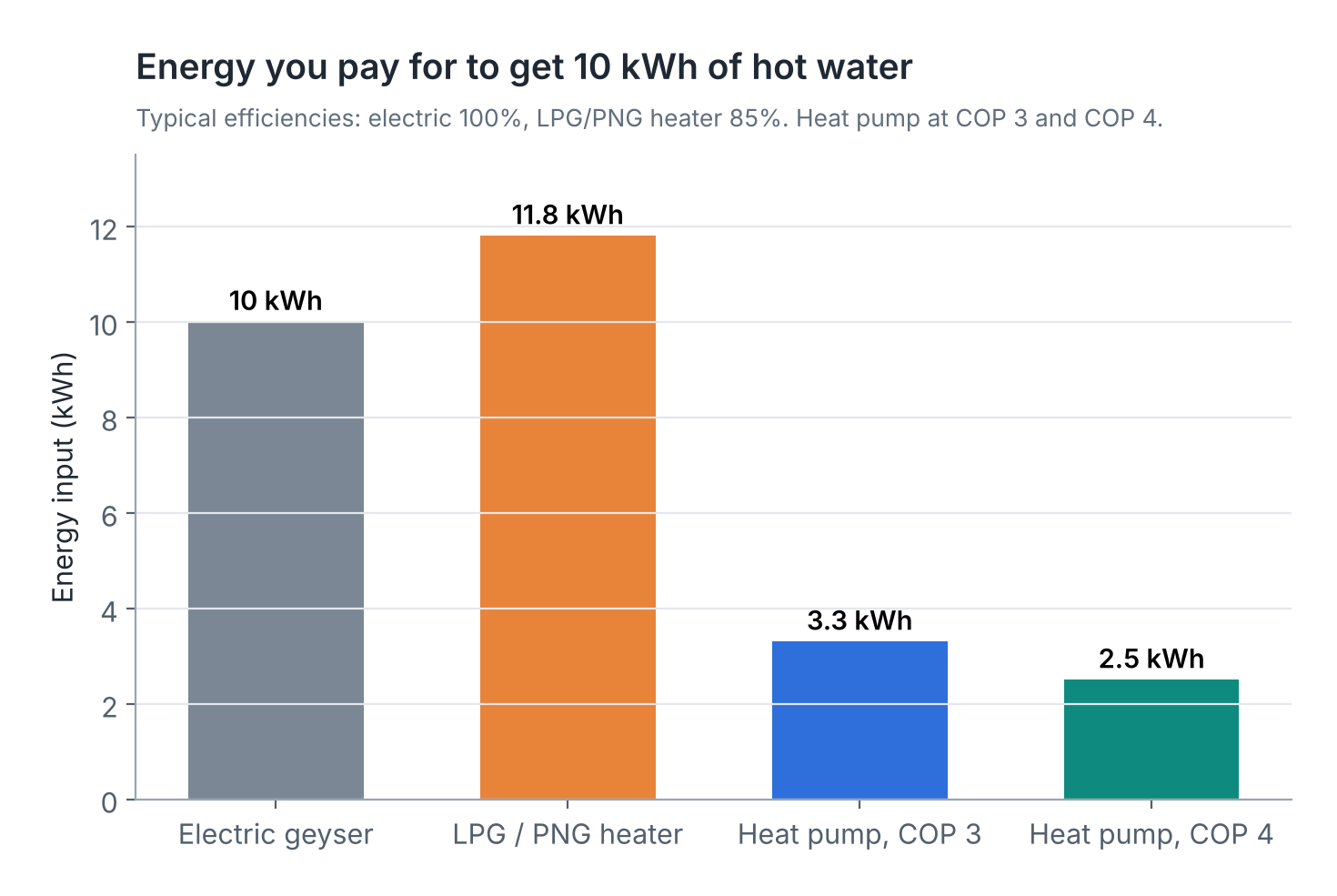
| Heating method | Efficiency or COP (typical) | Heat delivered per 1 unit of input |
|---|---|---|
| Electric geyser element | about 95–100% | about 1 kWh |
| LPG or PNG water heater | about 80–90% | about 0.8–0.9 kWh of fuel energy |
| Diesel boiler | about 80–88% | about 0.8–0.88 kWh of fuel energy |
| Air-source heat pump, hot water at 55–60 °C | COP about 3–4.5 | about 3–4.5 kWh |
Worked example — daily cost to heat 1,000 L for a hostel in Hyderabad
Heat 1,000 L from 25 °C to 60 °C. Example rates: electricity ₹9/kWh, LPG ₹100/kg. LPG energy content about 12.8 kWh/kg (typical net value); burner efficiency 85% (typical).

- Q = 1,000 × 4.186 × 35 = 1,46,510 kJ = 1,46,510 ÷ 3,600 = 40.7 kWh of heat.
- Electric geyser (about 100%): 40.7 kWh × ₹9 = ₹366 per day.
- LPG: fuel energy = 40.7 ÷ 0.85 = 47.9 kWh; LPG mass = 47.9 ÷ 12.8 = 3.74 kg; cost = 3.74 × ₹100 = ₹374 per day.
- Heat pump at COP 4: electricity = 40.7 ÷ 4 = 10.2 kWh; cost = 10.2 × ₹9 = ₹92 per day.
- Saving vs electric geyser: about ₹274 per day, about ₹1 lakh per year at 365 days.
Remember
- COP = heat delivered (kW) ÷ electrical input (kW).
- COP above 1 does not break physics; the extra heat comes from the air.
- COP falls as the temperature lift grows.
- Always compare running cost on the same heat demand in kWh.
A heat pump's COP is heat delivered divided by electricity used, and it exceeds 1 because most of the heat comes free from the air.
There are no comments for now.
to be the first to leave a comment.