1.7 Refrigerants and phase change
A refrigerant is the working fluid inside a heat pump or AC. It is picked so that it boils well below room temperature at a moderate pressure. It condenses at a useful high temperature when compressed.
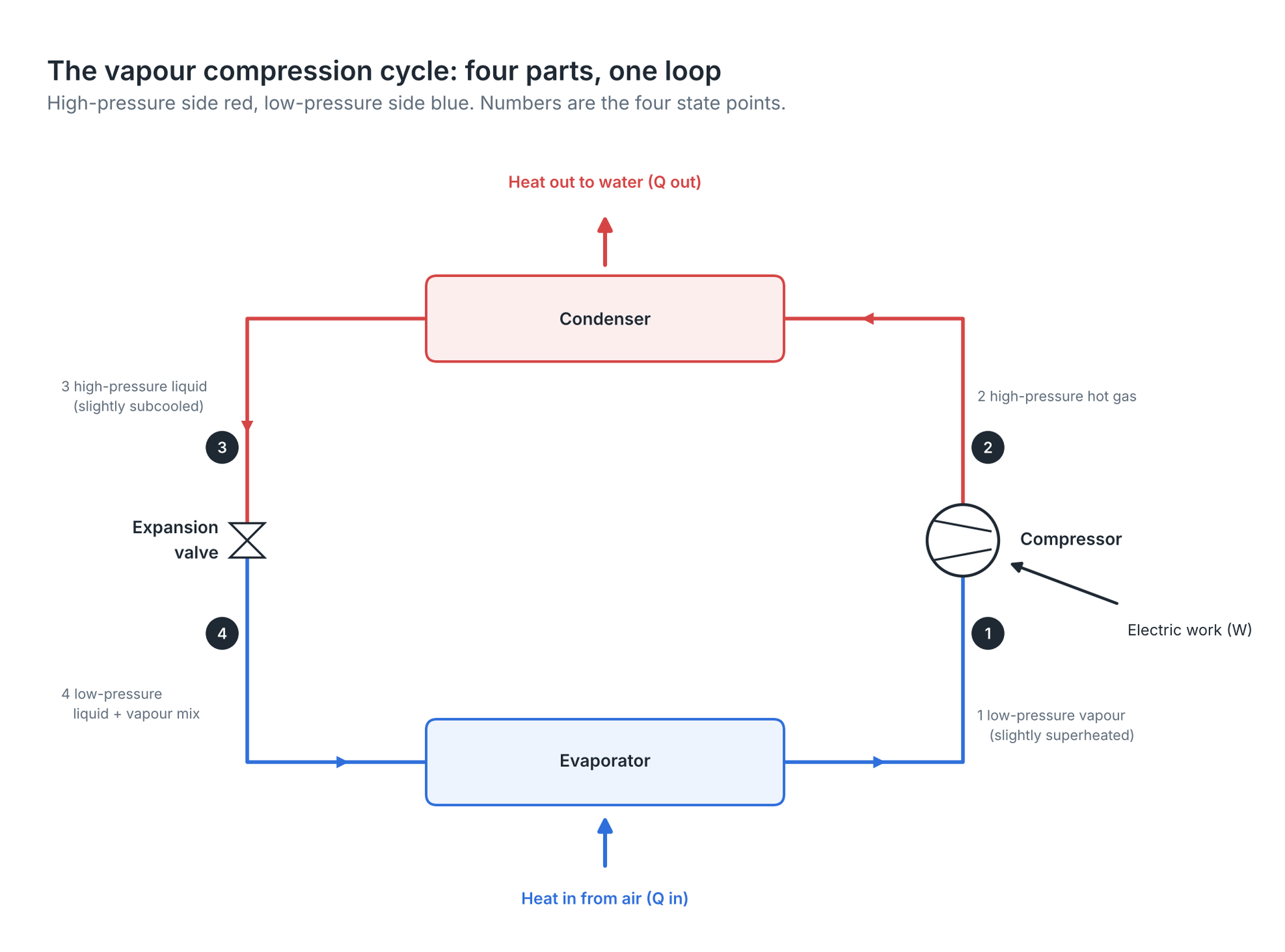
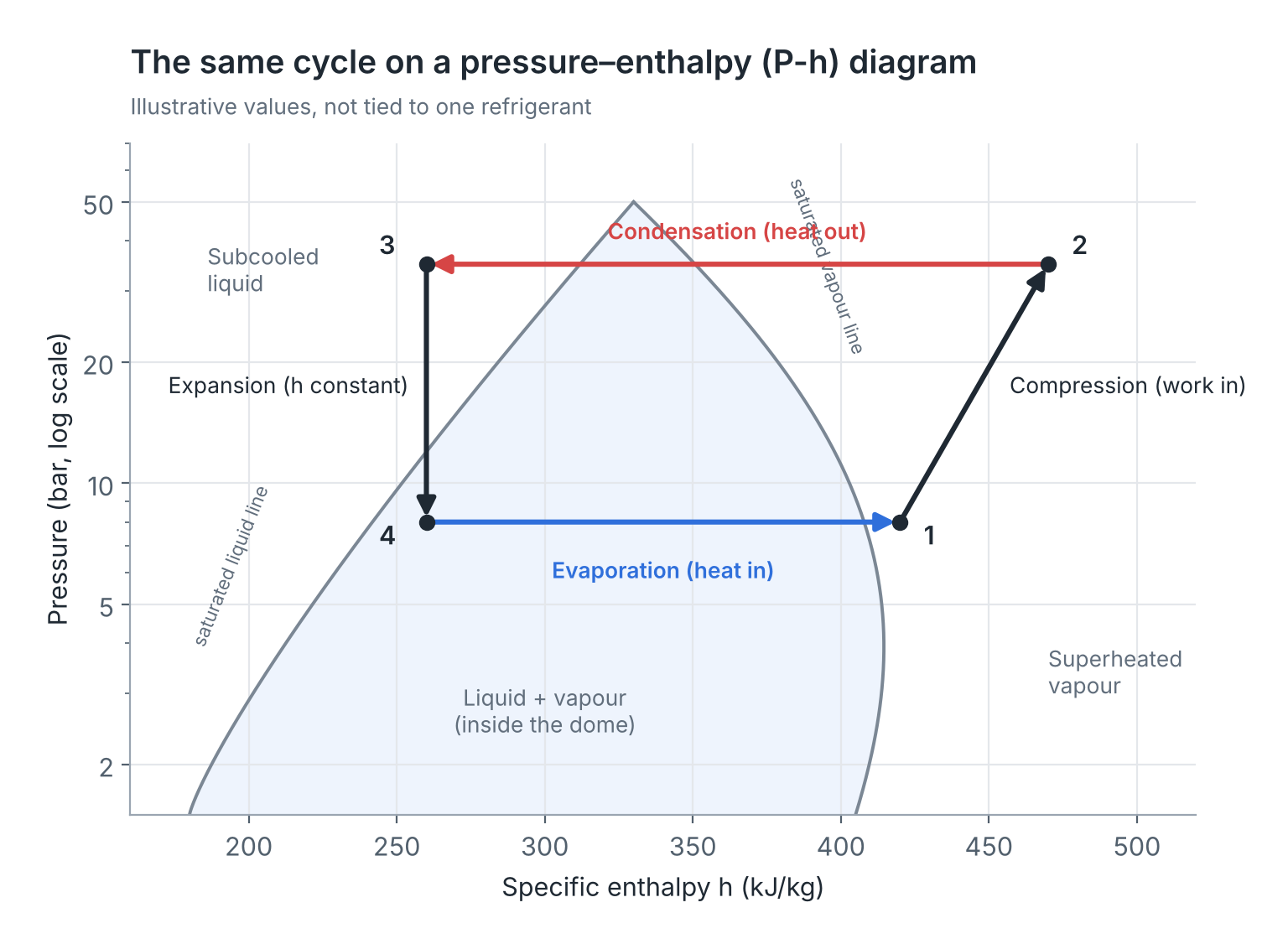
The basic cycle has four parts. The evaporator absorbs heat as the refrigerant boils. The compressor raises its pressure and temperature. The condenser releases heat as it condenses. The expansion valve drops the pressure again.
Think of a fridge. Inside, the refrigerant boils and takes heat from your food. At the back, it condenses and you feel warm air. A heat pump water heater uses that warm "back side" to heat water.
Refrigerants differ in pressure, efficiency, flammability and climate impact. GWP (global warming potential) compares a gas's warming effect to CO₂ over 100 years. Safety class (from ISO 817 / ASHRAE 34) rates toxicity (A low, B high) and flammability (1 none, 2L mild, 2, 3 high).
| Refrigerant | Type | GWP (100-yr, IPCC AR4) | Safety class | Sat. pressure at 0 °C (bar a, typical) | Sat. pressure at 40 °C (bar a, typical) |
|---|---|---|---|---|---|
| R134a | HFC | 1,430 | A1 | about 2.9 | about 10.2 |
| R410A | HFC blend | 2,088 | A1 | about 8.0 | about 24.2 |
| R32 | HFC | 675 | A2L | about 8.1 | about 24.8 |
| R290 (propane) | Natural (HC) | 3 | A3 | about 4.7 | about 13.7 |
| R744 (CO₂) | Natural | 1 | A1 | about 34.9 | Above critical point (31 °C) |
Worked example — refrigerant flow needed for 10 kW of heating
In the condenser, each kg of refrigerant gives up heat equal to its enthalpy drop. Assume a typical drop of 200 kJ/kg for this example.
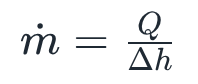
- Q = 10 kW = 10 kJ/s.
- ṁ = 10 ÷ 200 = 0.05 kg/s.
- Per hour: 0.05 × 3,600 = 180 kg/h of refrigerant circulating.
Remember
- Evaporator: refrigerant boils and absorbs heat. Condenser: refrigerant condenses and releases heat.
- The compressor sets the two pressures; the expansion valve separates them.
- Low GWP and correct safety class matter as much as efficiency.
- Never mix refrigerants or top up with a different one.
A refrigerant is a fluid chosen to boil at low temperature and condense at high temperature, carrying heat as latent heat.
There are no comments for now.
to be the first to leave a comment.