1.1 Heat vs temperature: what we are really moving
Temperature is a measure of how fast the molecules in a substance are moving. We measure it in degrees Celsius (°C) or kelvin (K). A thermometer reads temperature, not heat.
Heat is energy in transit. It always flows from a hotter body to a colder body, on its own. We measure heat in joules (J), kilojoules (kJ) or kilowatt-hours (kWh).
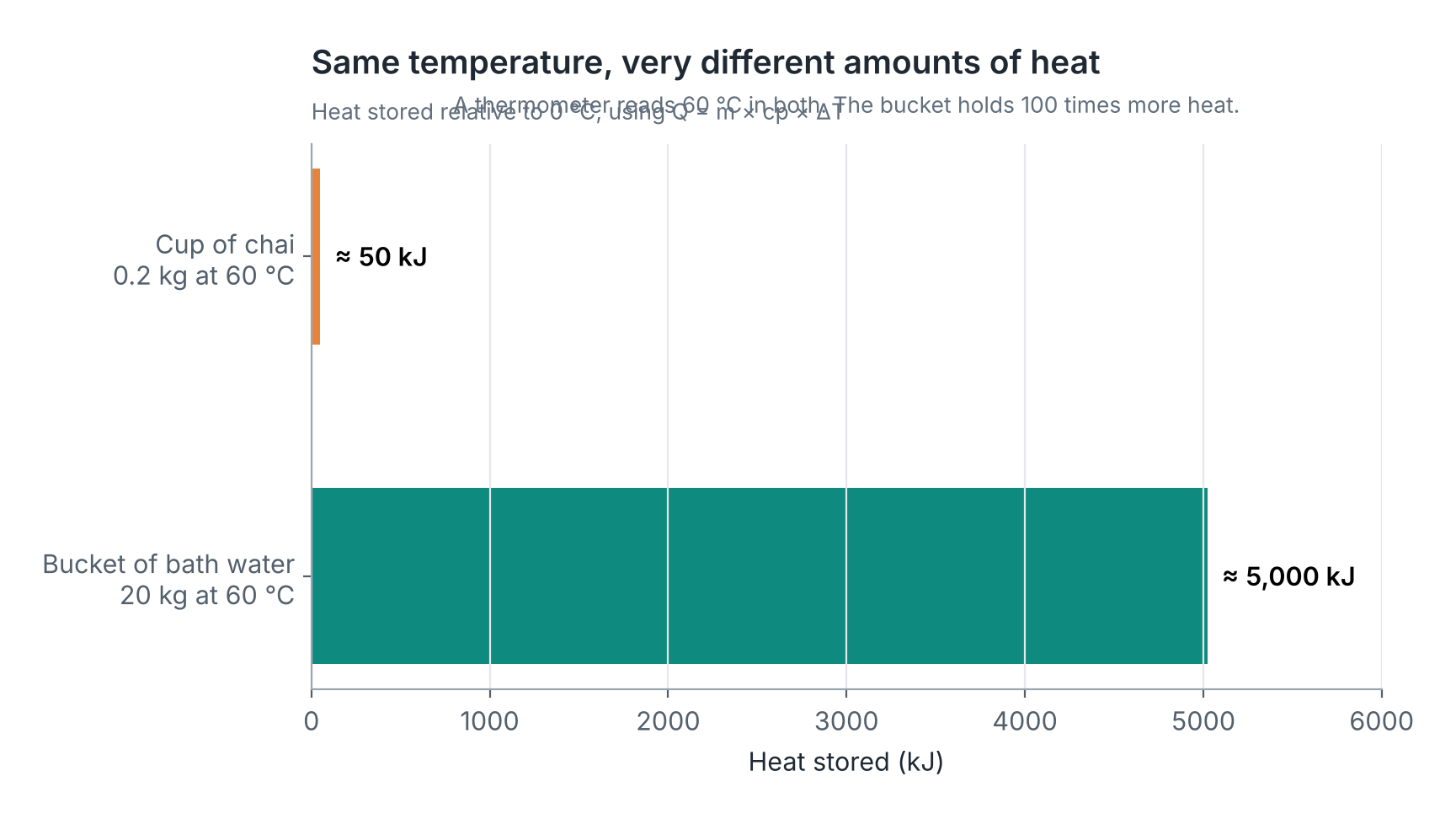
Think of a cup of chai and a full bucket of bath water, both at 60 °C. They have the same temperature. But the bucket holds far more heat, because it has far more water.
A heat pump does not "make" heat. It moves heat from a cooler place, like outdoor air, into a warmer place, like a hot water tank. That is why we always ask: how much heat, at what temperature?
The kelvin scale starts at absolute zero, the coldest possible temperature. 0 K = −273.15 °C. A temperature difference of 1 K is the same size as 1 °C.
| Quantity | What it tells you | Unit (SI) | Measured with |
|---|---|---|---|
| Temperature | How hot or cold | °C or K | Thermometer, sensor |
| Heat (energy) | How much energy moved | kJ, kWh | Calculated or heat meter |
| Heat rate (power) | How fast energy moves | kW | Calculated or heat meter |
Worked example — heat stored in a bucket vs a cup
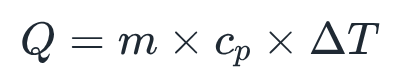
- Water specific heat, cp = 4.186 kJ/kg·K (typical value near room temperature).
- Cup: Q = 0.2 × 4.186 × (60 − 0) = 50.2 kJ.
- Bucket: Q = 20 × 4.186 × (60 − 0) = 5,023 kJ.
- Same temperature, but the bucket holds 100 times more heat.
Remember
- Temperature is a level; heat is a quantity of energy.
- Heat flows naturally from hot to cold only.
- A temperature difference of 1 K equals a difference of 1 °C.
- A heat pump moves heat; it does not create it.
Temperature tells us how hot something is; heat is the energy that flows because of a temperature difference.
There are no comments for now.
to be the first to leave a comment.