1.3 Sensible and latent heat
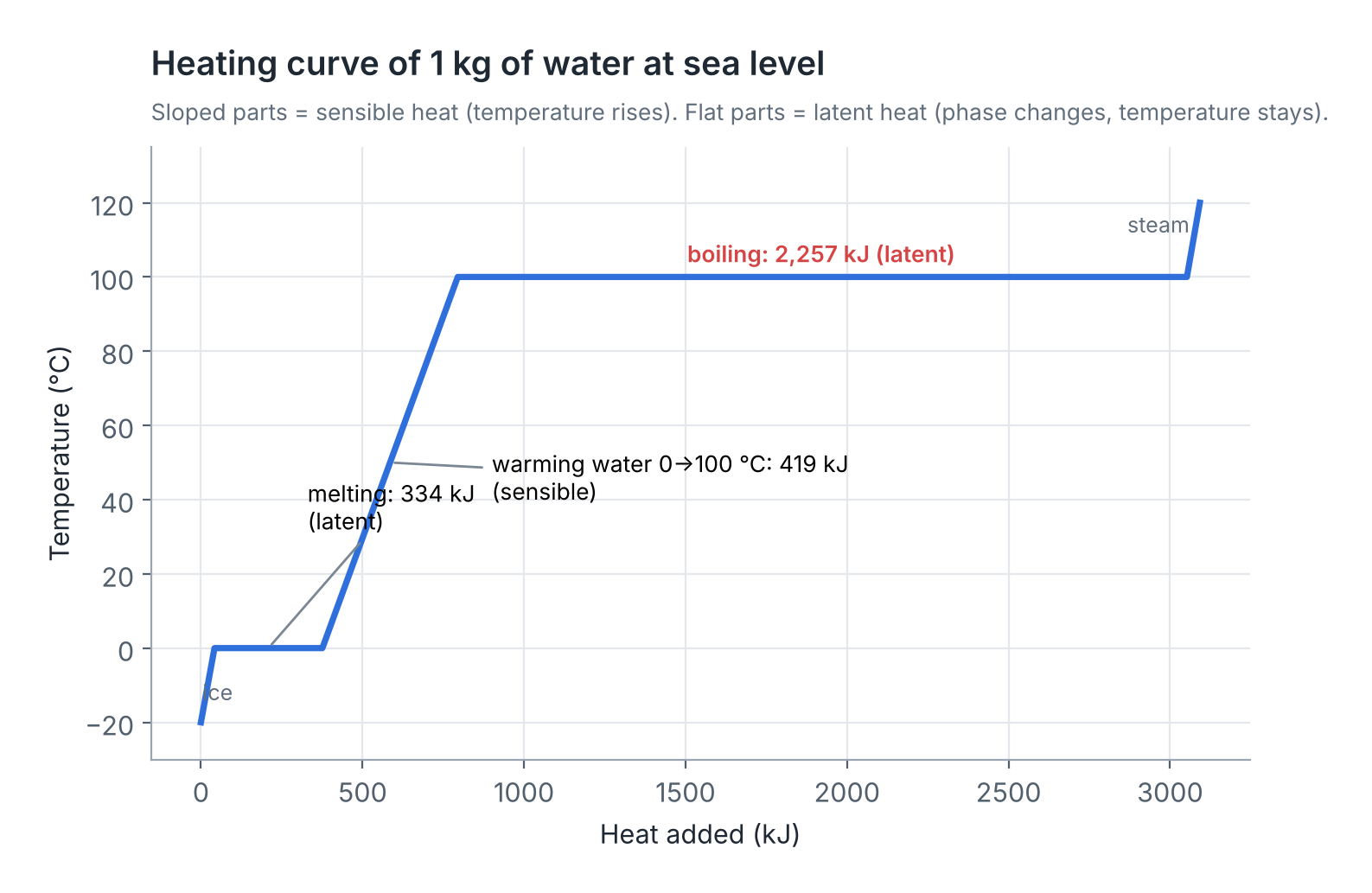
When you heat water on a stove from 25 °C to 100 °C, the thermometer rises. That heat is called sensible heat, because you can "sense" it on a thermometer.
Once water reaches 100 °C at sea level, it starts boiling. The flame keeps adding heat, but the temperature stays at 100 °C until all the water turns to steam. That hidden heat is called latent heat.
Latent heat is large. Turning 1 kg of boiling water into steam needs about 2,257 kJ. Warming the same kg from 0 °C to 100 °C needs only about 419 kJ.
A clay matka cools water using latent heat. A little water seeps through the clay and evaporates. Evaporation takes latent heat from the remaining water, so it gets cooler.
Refrigeration and heat pumps depend on latent heat. The refrigerant absorbs a lot of heat when it evaporates and gives it back when it condenses.
| Property of water (typical, 1 atm) | Value |
|---|---|
| Specific heat of liquid water | 4.186 kJ/kg·K |
| Specific heat of ice | about 2.1 kJ/kg·K |
| Latent heat of fusion (melting ice) | about 334 kJ/kg |
| Latent heat of vaporisation at 100 °C | about 2,257 kJ/kg |
Worked example — warming a 100 L geyser in Bengaluru
Cold water comes in at 25 °C. We want 60 °C. 100 L of water is about 100 kg.
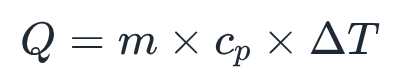
- Q = 100 × 4.186 × (60 − 25) = 14,651 kJ.
- Convert to kWh: 14,651 ÷ 3,600 = 4.07 kWh.
- With an electric element (close to 100% efficient) at an example rate of ₹9/kWh: 4.07 × 9 = about ₹37.
- If that same 100 kg were boiled to steam, it would need another 100 × 2,257 = 2,25,700 kJ (62.7 kWh). Latent heat is big.
Remember
- Sensible heat shows on a thermometer; latent heat does not.
- Q = m × cp × ΔT for sensible heat; Q = m × hfg for latent heat.
- Evaporation absorbs heat; condensation releases it.
- Refrigerants carry heat mainly as latent heat.
Sensible heat changes temperature; latent heat changes phase (solid, liquid, gas) without changing temperature.
There are no comments for now.
to be the first to leave a comment.