10.6 Recovery, recycling and disposal of refrigerants
Recovery means removing refrigerant from a system into a cylinder. Recycling means cleaning it on site (oil and moisture removal) for reuse in the same owner's system. Reclaim means reprocessing it at a facility to new-product purity. Destruction means breaking it down in an approved plant.
Venting HFCs harms the climate. Venting hydrocarbons creates a fire risk. Recover everything except where a procedure specifically permits controlled venting of hydrocarbons outdoors.
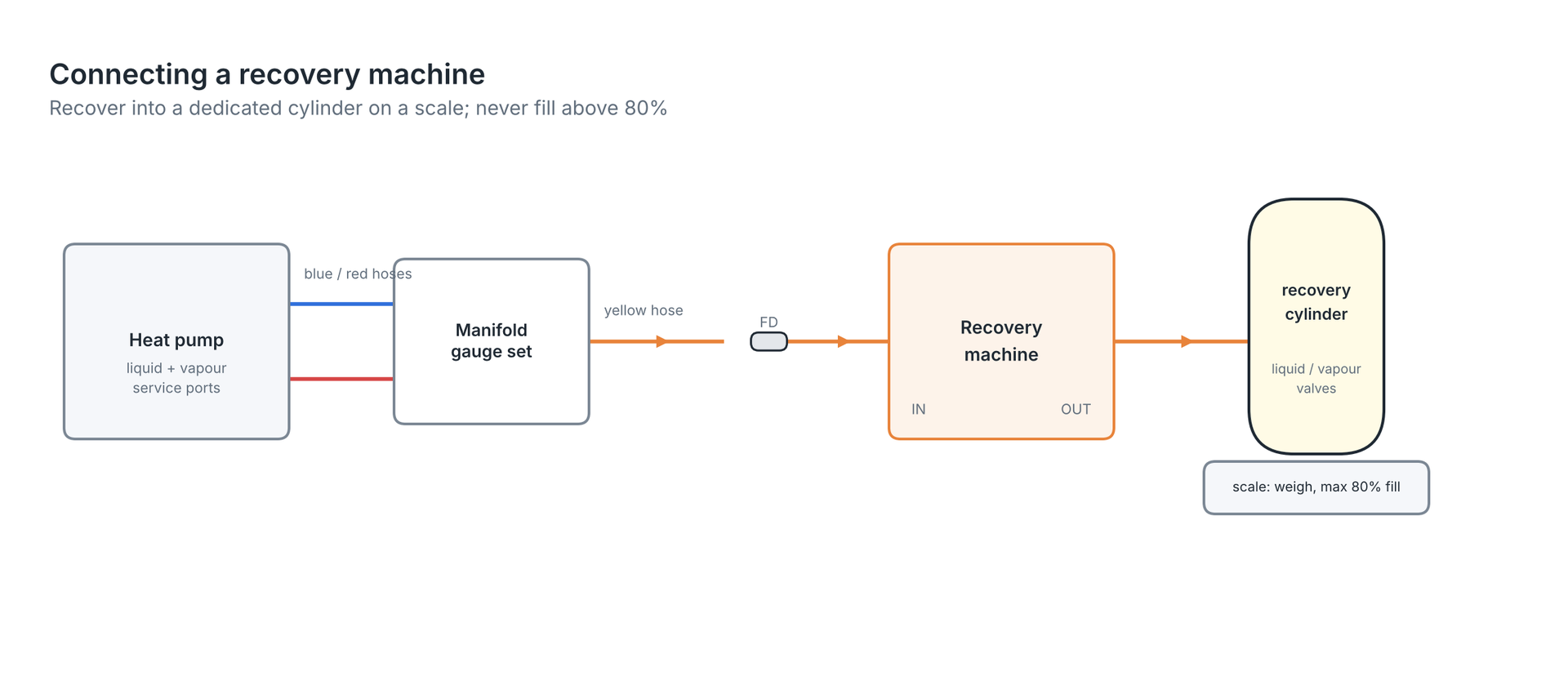
Recover liquid first (faster), then vapour. The cylinder sits on a scale. Use a cylinder rated and labelled for the refrigerant.
Worked example — maximum safe fill of a recovery cylinder
A recovery cylinder has a water capacity of 12 L. You recover R32 with liquid density about 0.96 kg/L (typical at room temperature). Use the 80 % fill rule.

- mmax = 12 × 0.96 × 0.8 = 9.2 kg (approximately).
- If the empty cylinder (tare) weighs 9 kg, stop recovery at 18.2 kg gross on the scale.
| Step | Action |
|---|---|
| 1 | Identify refrigerant from nameplate; never mix types in one cylinder |
| 2 | Weigh empty cylinder, evacuate it |
| 3 | Connect as diagram; purge hose air |
| 4 | Recover liquid, then vapour, to the target vacuum |
| 5 | Close valves, label cylinder: refrigerant, weight, date, site |
| 6 | Record in service log; send for reclaim or destruction |
Remember
- One refrigerant per cylinder; label it.
- Never fill beyond 80 % of liquid capacity.
- Use a recovery machine rated for the refrigerant class (A2L/A3).
- Keep records of quantities recovered.
Refrigerant is never vented — it is recovered into a rated cylinder, then recycled, reclaimed or destroyed.
There are no comments for now.
to be the first to leave a comment.