10.1 Electrical safety and lock-out/tag-out
A heat pump runs on 230 V single-phase or 415 V three-phase supply. Both can kill. Current through the chest of only tens of milliamps can stop the heart.
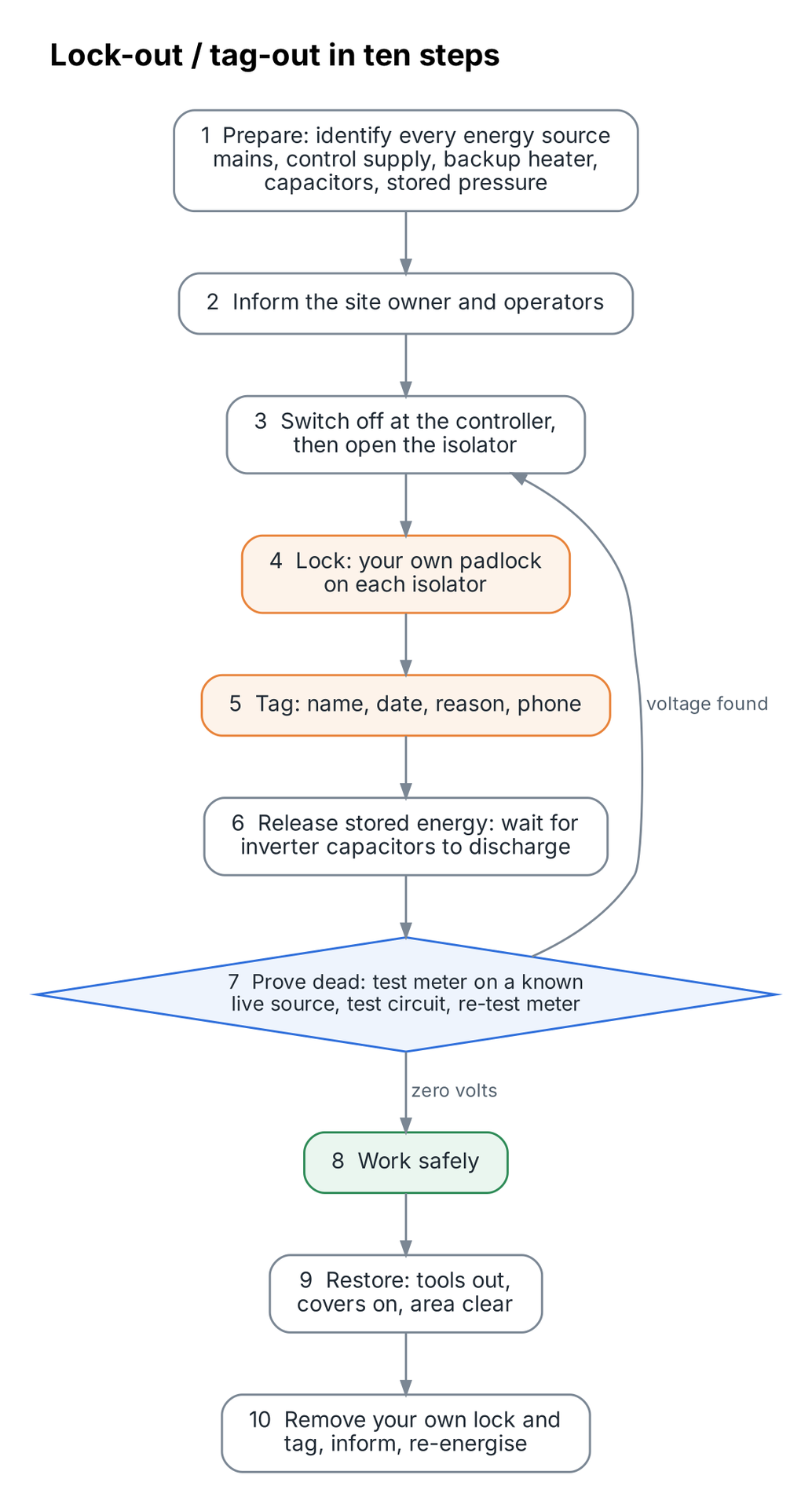
Lock-out/tag-out (LOTO) is a written routine that keeps a machine switched off while someone works on it. "Lock-out" means a personal padlock on the isolator. "Tag-out" means a label saying who is working and why.
Think of LOTO like keeping the gas cylinder valve shut and the regulator removed while you repair the stove. Turning the knob off is not enough.
Inverter drives add one more hazard. Their DC bus capacitors (energy-storing parts inside the drive) can hold a lethal charge for several minutes after power-off. Wait the time printed on the drive label, then measure.
| Hazard | Where in a heat pump | Control |
|---|---|---|
| Mains voltage | Terminal block, contactors, inverter input | Isolate, lock, test |
| Stored DC charge | Inverter / VFD capacitors | Wait the labelled time, measure DC bus |
| Backfeed | Second supply for backup heater or pump | Isolate every source |
| Earth fault | Damaged cable, wet panel | RCD/RCCB, earth continuity test |
| Moving parts | Fan blades, pump couplings | Lock out before reaching in |
Remember
- Every person working fits their own lock; one lock per person.
- "Test before touch": prove your meter works before and after testing the circuit.
- Inverter capacitors stay live after switch-off; wait and measure.
- Check for second supplies such as backup heaters and external pumps.
- Only the person who fitted a lock removes it.
Never trust a switch — isolate, lock, tag and prove the circuit dead before you touch it.
There are no comments for now.
to be the first to leave a comment.