6.1 How to compare running costs fairly
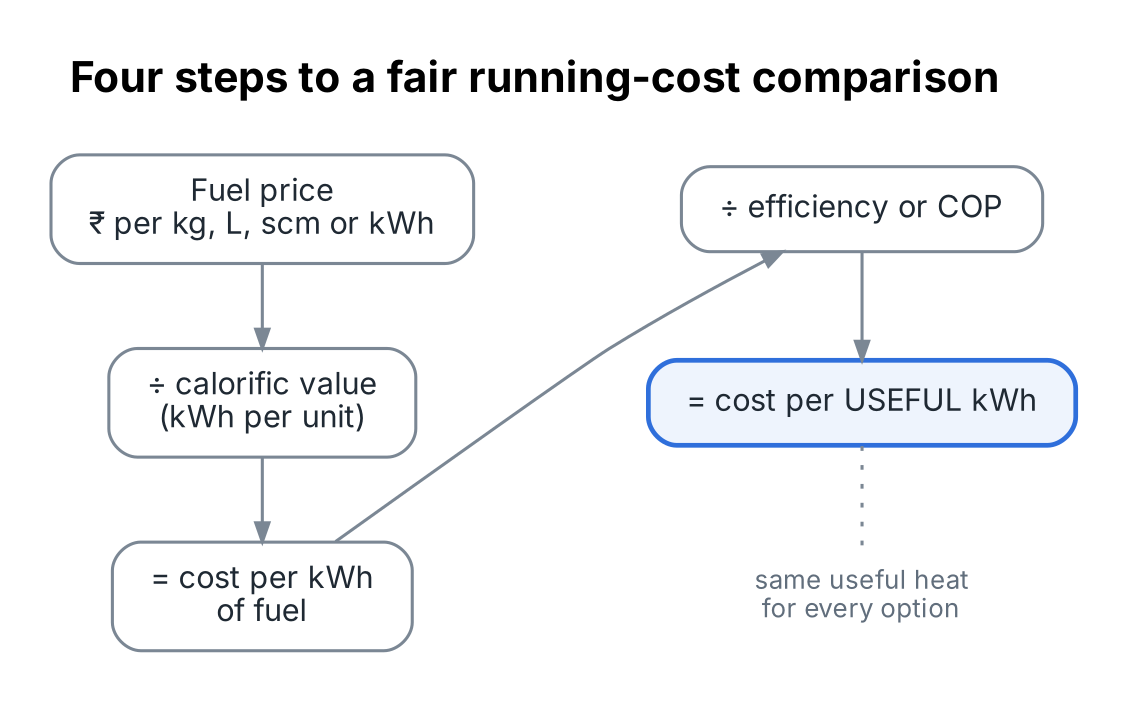
A litre of diesel and a unit of electricity are not the same thing. Each contains a different amount of energy. Each appliance also wastes a different share of it.
Think of buying rice. A 5 kg bag at ₹300 and a 2 kg bag at ₹140 cannot be compared by bag price. You divide by weight first. Heat works the same way, but you also subtract what spills on the floor.
Useful heat is the energy that actually reaches the water, air or process. It is measured in kWh (kilowatt-hour, 3.6 MJ). Calorific value is the energy contained in one unit of fuel. Efficiency is the share of that energy that becomes useful heat. For a heat pump we use COP (coefficient of performance): useful heat out divided by electricity in.
| Rule | Why it matters |
|---|---|
| Use the same useful heat demand for every option | Otherwise you compare different jobs |
| Use net calorific value (NCV) consistently | Gross values flatter combustion efficiency |
| Use seasonal efficiency, not peak test efficiency | Boilers cycle; heat pump COP changes with weather |
| Include standby and distribution losses | Long pipes and hot tanks lose heat all day |
| Include maintenance, not only fuel | Burners, chimneys and filters cost money |
| Use the real tariff, including fixed and demand charges | The average ₹/kWh can differ from the energy rate |
Net calorific value (NCV) excludes the heat locked in water vapour in the flue gas. Gross calorific value (GCV) includes it. Mixing the two can shift results by about 10%.
Worked example — what does one useful kWh cost from an electric geyser?

- Electricity price (example): ₹9/kWh. Energy per unit: 1 kWh.
- Typical electric resistance efficiency including tank losses: 0.95.
- Cost per useful kWh = 9 ÷ (1 × 0.95) = ₹9.47.
Remember
- Divide price by energy content, then by efficiency.
- Keep one useful heat demand for all options.
- Use seasonal, real-world efficiency figures.
- Add maintenance and fixed charges before deciding.
compare fuels by the cost of one unit of useful heat delivered, not by the price on the bill.
There are no comments for now.
to be the first to leave a comment.